



A crackling open fire brings cozy warmth and atmosphere. But what if the fire just doesn't work the way you want it to? Your fire in the stove keeps going out? The chimney smoke doesn't go out? Or the chimney smoke is seeping into your home?
The cause often lies in external factors such as the chimney or the air supply. In this article, we explain what exactly is behind this and how you can improve the chimney draught.
What you can expect
- How does the chimney draught actually work?
- Improving the chimney draught: efficient immediate measures
- Causes of draught problems and smoke in the stove
- The chimney does not draw, but pushes? Causes of poor draught
- When you should call in a specialist
- Frequently asked questions and our answers
How does the chimney draught work?
Before we turn to the causes and solutions, it is important to understand how the draught in the chimney is created. For a fireplace to function optimally, the chimney draught - i.e. the extraction of hot flue gases through the chimney - must work smoothly.
The chimney draught is created by the difference in temperature and density between the hot exhaust air in the chimney and the cooler outside air. The resulting air flow draws flue gases upwards and at the same time conveys oxygen-rich air to the fire to keep it burning.
|
To support combustion and keep it stable, modern stoves have three air inlets:
|
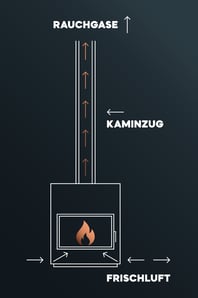 |
The controlled supply of primary, secondary and tertiary air optimizes combustion and keeps the chimney draught stable so that smoke and heat are effectively extracted and combustion is clean.
Improving the chimney draught: efficient immediate measures
Before you contact a specialist, there are a few simple things you can try out yourself. There is often a very simple cause behind the problem - and fortunately it can be fixed in just a few minutes.
- Preheat the chimney: A cold chimney won't draft - the air in it is too heavy to rise. In this case, a pilot light at the chimney cleaning opening can help. Use several lighters or newspaper for this. The heat causes the air in the chimney to move, the draught starts and your fire can burn properly.
- Open the window on the side facing away from the wind: This ensures a sufficient supply of fresh air in the room, which is necessary for combustion.
- Fully open the air supply: Make sure that all regulators and dampers are fully open when lighting the fire to ensure a sufficient draught.
- Wait briefly: The chimney needs time to come up to temperature, especially when firing up for the first time after a break.
If none of these steps help, read on - then the problem is probably deeper.
Causes of draught problems and smoke in the stove
The chimney does not draw, but pushes? Causes of poor draught
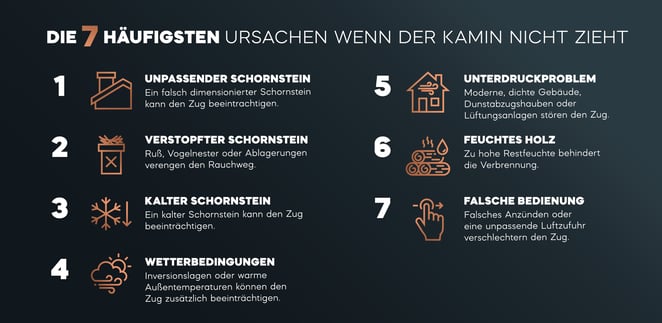
The chimney is the heart of a functioning fireplace. It creates the necessary negative pressure that safely discharges the flue gases outside. If it doesn't work properly, smoke will quickly fill the home. The causes can vary greatly - from incorrect dimensioning and blockages to a chimney that is simply too cold.
Unsuitable chimney
An incorrectly dimensioned chimney - too short, too long or with a diameter that is too large or too small - has a significant impact on the chimney draught. If the negative pressure is too low, for example due to an unsuitable chimney cross-section, the chimney panes can turn black and the stove can smoke when lighting or adding logs.
To avoid such problems, a chimney draught booster or a chimney extension can be installed. Both options stabilize the draught so that the fireplace burns more cleanly and efficiently. The best contact for this is a stove fitter from your region.
Blocked chimney
Has your stove suddenly stopped drawing? This may be due to clogged connecting pipes or a blocked chimney. Soot, deposits or blockages - caused by a bird's nest, for example - can significantly impair the chimney draught. It is therefore worth taking a closer look, especially after long breaks in operation or in spring.
To prevent this from happening in the first place, the connecting pipes and chimney should be checked and cleaned regularly. Your chimney sweep is responsible for the chimney itself - the connecting pipes, on the other hand, are your responsibility. It may make sense to commission a stove fitter to check, clean and maintain them. This ensures that the draught remains stable and your chimney works efficiently and safely.
Cold chimney flue
If your fireplace has not been in use for a long time, the chimney will be cold. Cold air falls down - which is exactly the opposite of what you need. The chimney must first be brought up to temperature before it draws properly
What you can do:
- Warm it up in advance: Hold a burning newspaper briefly in the open firebox and check whether the flame draws upwards.
- Start slowly: Start with small, dry pieces of wood and kindling cubes - not yet with large logs.
- Use the top-down method: This involves placing larger logs at the bottom, smaller wood in the middle and the kindling at the very top. The fire burns slowly downwards and warms up the chimney evenly - for a stable draught right from the start.
Weather conditions: In what weather does the chimney not draw?
Your chimney does not draw equally well in all weather conditions. Problems often occur in so-called inversion weather conditions. If the lower layers of air are colder than the upper layers, the flue gases cannot draw properly and are forced back. Chimney draught can also be impaired when the outside temperature is warm.
In this case, a short "bait fire" - a small kindling fire with easily flammable materials - can help to stimulate the chimney draught. A chimney extension can also improve the draught and ensure stable air circulation even in unfavourable weather.
Negative pressure problem: lack of combustion air due to ventilation systems
Extractor hoods or ventilation systems in the house can deprive the fireplace of important combustion air. Particularly in modern, well-insulated houses with tight windows and doors, the high flow rate of these extractor systems can lead to negative pressure problems. In such cases, it is possible that the chimney does not draw enough air and pushes the resulting smoke into the living space.
This is where fireplaces with an external combustion air supply or room air-independent fireplaces (RLU) offer a solution. They supply the air required for combustion directly from outside.
Another effective option is the use of a negative pressure monitor. This system continuously monitors the pressure ratio and switches off the negative pressure generator if there is a critical pressure difference.
FLAMMABLE wood
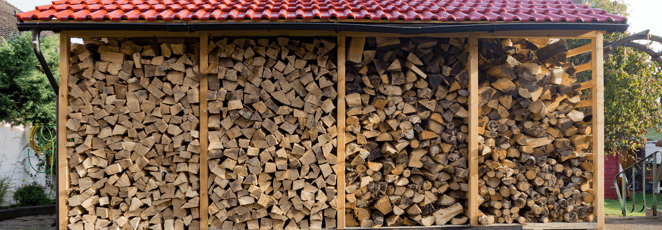
Is your firewood only turning black but not burning? Damp or unsuitable wood is a common cause of incomplete combustion: The wood only glows and does not burn, which leads to soot formation and smoke development. Moist wood requires more energy to burn. It must first evaporate the residual moisture - this hinders complete combustion and worsens the draught.
The following applies here: Dry, split, well-stored hardwood with a residual moisture content of less than 20 % ensures clean and strong combustion. It is also important that the log size is adapted to the combustion chamber.
We have compiled a more detailed explanation of what you should look out for in your firewood in a blog post.
Incorrect operation
A common cause of soot formation and smoke development is incorrect operation of the air regulator. To simplify operation across all models, we at Spartherm have decided to install only one air regulator.
Too little primary air when lighting or the air supply throttled too early? That sounds like a minor issue. But if the air supply is not set correctly, the wood does not burn completely and smokes heavily, resulting in black chimney glass and inefficient heating.
Here's how to do it right:
- Fully open all air slides when lighting the fire
- Onlyreduce theair supplyslowlyonce the fire is burning well and the operating temperature has been reached
- Never go below the manufacturer's minimum air supply - this is stated in your operating instructions
You can find more information on correct lighting in this blog post.
Our smart fireplace assistance functions offer a convenient solution for easy operation. They automatically regulate the air supply and ensure optimum combustion. This keeps your fireplace cleaner and you can devote yourself entirely to enjoying the fire.

When you should call in a specialist
If your fireplace continues to draw poorly or the fire keeps going out, we recommend calling in a stove fitter or chimney sweep. A specialist can check whether the fireplace and chimney fit together and whether it makes sense to retrofit a draught booster or chimney extension.
Frequently asked questions and our answers
Why does my chimney always smoke when I light it?
This is usually due to damp wood, a cold chimney or too little air supply. Start with the top-down method and well-stored, dry wood - this solves the problem in most cases.
What to do if smoke from the chimney enters the room?
Open the windows immediately, turn up the air supply to the fireplace and ventilate the room thoroughly. If the room is heavily filled with smoke, secure the fireplace and leave the room. For long-term safety, it is worth installing a CO detector.
Why doesn't my fireplace draw in a new build?
In modern, well-insulated houses, negative pressure often occurs. An air-independent fireplace is the best solution here if your fireplace draws air from the installation room or is operated simultaneously with an exhaust air system and cannot draw in sufficient fresh air from outside.
Why is my fireplace suddenly smoking even though it always worked before?
Sudden smoke usually has a specific cause: a constricted or sooty chimney, a bird's nest in the chimney (especially in spring), a defective door seal or changed pressure conditions in the house - for example due to a new ventilation system or newly installed, sealed windows.
First check whether anything has changed externally and, if in doubt, contact your stove fitter or chimney sweep.
Why does my chimney draw so poorly the first time I light it after the summer?
After a longer pause, the chimney is cold and the air column in it stands still. Warm air only rises if the chimney is already preheated.
Tip: Light a so-called pilot light in the combustion chamber or the cleaning opening of your chimney. Wood chips, for example, are suitable for this. This preheats the air in the draught and makes starting much easier.
Can damp wood cause my chimney to smoke?
Yes - damp wood is actually one of the most common causes of a smoking fireplace. Wood with a residual moisture content of over 20 % does not burn completely, produces a lot of smoke and leads to sooting of the chimney in the long term.
Invest in a simple moisture meter (approx. €10-20) and check your wood before burning it. Well-stored hardwood such as beech or birch with at least two years drying time is ideal.
My fireplace used to work - since the installation of new windows it has been smoking. Why?
Modern, tightly sealed windows and well-insulated houses hardly let in any fresh air from outside. This creates a negative pressure in the room, which prevents the chimney from drawing properly - or even pushes the smoke into the home.
The solution: either tilt a window briefly when you light the fire or, in the long term, switch to an air-independent stove that draws its combustion air directly from outside.
Our extractor hood is running - could that affect my stove?
Yes, absolutely. Extractor hoods or ventilation systems create negative pressure in the home. This can lead to the chimney no longer drawing properly or smoke being forced into the room.
Switch off the extractor hood when using the fireplace or make sure there is a sufficient supply of fresh air.
A so-called negative pressure monitor can give you even more safety. This continuously monitors the pressure ratio and switches off the negative pressure generator (e.g. the extractor hood) if the negative pressure in the chimney is too low, before it can become critical.
Can the weather cause my chimney to smoke?
Yes, in certain weather conditions - for example inversion weather conditions in winter, strong winds from an unfavorable direction or small temperature differences between inside and outside in autumn - the chimney draught can be disturbed. In such cases, a draught booster, which is placed on the chimney and mechanically supports the draught, can help. Your stove fitter will advise you on which model is suitable for your chimney.
A chimney wind deflector - also known as a chimney cap or chimney hood - is used to stabilize the chimney draught in difficult weather conditions and prevent wind and rain from entering.
Is smoke in the living room dangerous? When should I take action?
Yes, smoke in the living room should always be taken seriously. Chimney smoke contains carbon monoxide (CO) - a colorless and odorless gas that can be dangerous even in low concentrations.
Symptoms include headaches, dizziness and nausea. If smoke enters the home: close the oven immediately, open the window and leave the room.
A CO detector near the fireplace can save lives.
When do I need to contact a professional?
You should not act yourself in the following situations:
- Smoke is entering the living room despite the stove door being closed
- Unusual noises in the chimney (e.g. bird's nest)
- Your CO detector frequently sounds the alarm
How often does my chimney need to be checked?
According to legal regulations, the chimney sweep must check your chimney regularly. The exact frequency depends on the intensity of use and the fuel. As a rule, the inspection is carried out once a year. In addition, the so-called fireplace inspection takes place every three to four years.
How can I tell if my door seal is still in order?
A simple test: Stick a piece of paper into the closed stove door. If it can be pulled out easily, the seal is worn and should be replaced. A leaking door seal leads to uncontrolled air supply and poor combustion - and can ultimately contribute to the oven smoking.
You might also be interested in:
 Operation & Maintenance
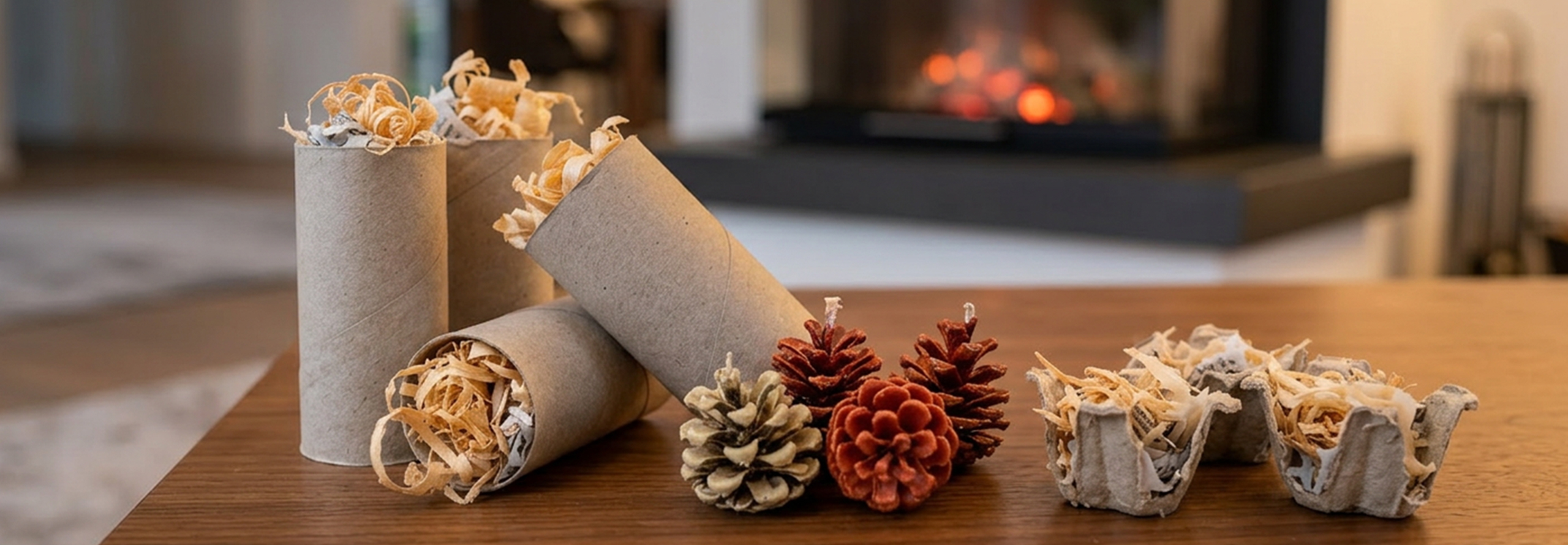
Make Your Own Fire Starters: Three Simple DIY Ideas
Do you want to light your stove but don't have a firelighter? Or are you bothered by the uncertainty about the ...
3 min read
 Operation & Maintenance
Your Fireplace: What Regulations You Really Need to Follow
A wood-burning stove should bring warmth, peace and comfort - no uncertainty. Nevertheless, many people stumble across ...
7 min read