



A fire needs air - and a properly functioning flue is the be-all and end-all. Modern, well-insulated houses put this to the test. If an extractor hood or ventilation system is running at the same time, dangerous negative pressure can develop. In the worst-case scenario, the flue gases are then no longer reliably discharged via the chimney, but enter the living space.
This is precisely where the negative pressure monitor comes in: It monitors the pressure conditions and enables safe parallel operation of the stove and ventilation system.
What you can expect
- Operating a wood-burning stove and extractor hood at the same time: why this can be critical
- What is a negative pressure monitor and how does it work?
- When is a negative pressure sensor on the fireplace useful?
- Room-sealed stoves: another option for modern homes
- Frequently asked questions
Operating a wood-burning stove and extractor hood at the same time: why this can be critical
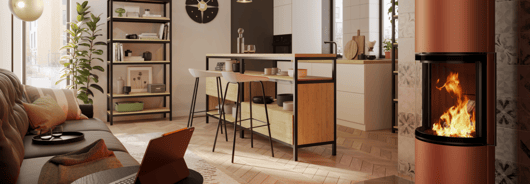
A typical scenario: the fireplace is burning in the living area while the extractor hood is running in the kitchen. It is precisely this everyday situation that can become a problem in modern, well-insulated houses.
Extractor hoods and ventilation systems actively convey air to the outside. If not enough fresh air flows in, a negative pressure is created in the building. In order for the flue gases to be reliably discharged to the outside, there must be a stronger negative pressure in the chimney during operation than in the installation room. If this is not the case, the high negative pressure in the room changes the flow conditions in the chimney: instead of drawing the flue gases outwards, the direction of flow is reversed. The result: smoke and, in the worst case, toxic carbon monoxide (CO) enter the living space.
Carbon monoxide (CO) is colorless, odorless and tasteless and is produced by incomplete combustion. As it remains invisible to human perception, it can become dangerous without being noticed. A CO detector in the installation room is therefore a simple but important safety measure that we strongly recommend.
The negative pressure monitor is there to prevent exactly this - and to reliably discharge both flue gases and carbon monoxide through the chimney. It enables safe parallel operation of the chimney and extractor hood or ventilation system.
What is a negative pressure monitor and how does it work?
A negative pressure monitor is a safety system for fireplaces that monitors the pressure conditions in the fireplace and installation room during operation in order to prevent the escape of flue gases and carbon monoxide. To do this, it constantly measures the pressure difference between the fireplace and the ambient air. As we already know, there must be a stronger negative pressure in the chimney than in the installation room for the flue gases to escape to the outside.
As soon as the negative pressure in the room reaches a critical limit value - e.g. if ventilation appliances draw off too much air - the negative pressure monitor automatically intervenes:
- It detects the critical pressure drop in the installation room.
- It sends a signal to the connected extractor hood or ventilation system.
- The ventilation unit is automatically switched off or throttled back.
- The pressure conditions normalize - the stove works safely again.
All this happens without you having to actively intervene. So you can enjoy your open fire with peace of mind, even when the building services are running.
The Spartherm S-USI 3.0 negative pressure monitor
S-USI 3.0, the negative pressure monitor from Spartherm, has been specially developed for use in combination with Spartherm stoves. It is permanently integrated into the control unit and communicates directly with connected ventilation units.
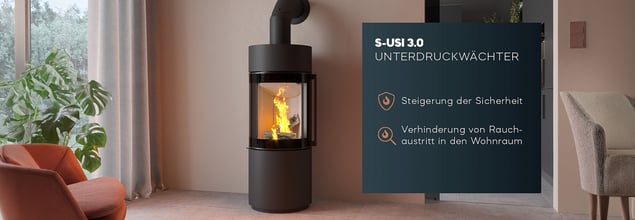
Important to know: Retrofitting a negative pressure monitor? This is partially possible.
The S-USI 3.0 negative pressure monitor can be retrofitted if there is access to the flue gas pipe between the fireplace and chimney. The best way to find out about the options on site is to speak to a specialist dealer and ask for advice.
WHEN IS A NEGATIVE PRESSURE SENSOR ON THE CHIMNEY USEFUL?
Critical negative pressure mainly occurs in well-insulated buildings - i.e. new buildings, KfW efficiency houses or energy-efficient renovated old buildings - where there is hardly any uncontrolled air flow. The problem is exacerbated by mechanical ventilation systems (KWL), powerful extractor hoods in exhaust air mode or the simultaneous operation of several ventilation units.
To ensure that you can enjoy your open fire without any worries even in these situations, a negative pressure monitor on the stove is a sensible solution.
It is best to discuss with a local specialist dealer whether a negative pressure monitor is actually necessary or recommended in your home. They will be able to assess the structural conditions and the existing building services most reliably.
AMBIENT AIR-INDEPENDENT STOVES: ANOTHER OPTION FOR MODERN HOMES
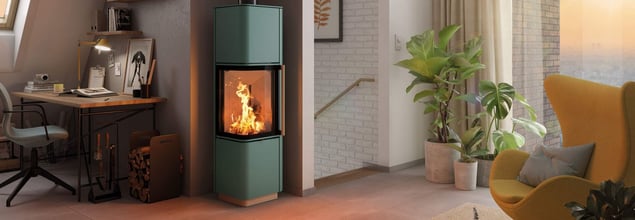
In addition to the negative pressure monitor, there is another option for safely combining wood-burning stoves and ventilation units: room-sealed stoves, or RLU stoves for short.
While conventional stoves often draw combustion air from the installation room, RLU-certified stoves supply the required fresh air directly from outside via a separate and sealed air duct. They are therefore completely independent of the pressure conditions in the room - and function reliably even if an extractor hood or ventilation system is in operation at the same time.
This makes RLU-certified stoves particularly interesting for well-insulated new builds or houses with controlled domestic ventilation.
Which solution - negative pressure monitor or RLU stove - is better suited to your situation depends on your house, your building services and your requirements. A Spartherm specialist dealer will be happy to advise you.
Frequently asked questions
Is a negative pressure switch mandatory in modern homes?
No, a negative pressure switch is not mandatory, but it is still useful in many modern buildings. Especially if your house is particularly well insulated, you have a ventilation system or the extractor hood often runs in parallel with the fireplace, you should think about a pressure switch for your fireplace.
You should always consult your district chimney sweep before installing the fireplace and ventilation system.
What requirements must my fireplace meet in a new build?
It is best to clarify with your local specialist dealer at an early stage which fireplace (e.g. room air-dependent or room air-independent) makes sense for you, which requirements it should meet and whether you also need a negative pressure monitor.
Can you operate a wood-burning stove and extractor hood at the same time?
Yes, but not "just like that". It is crucial that no dangerous negative pressure is created and that the exhaust gases are reliably discharged via the chimney. A pressure switch on your stove ensures safe parallel operation of the stove and extractor hood or ventilation system. Another option is to purchase an air-independent fireplace.
You might also be interested in:
 technology & efficiency
Fireplace features: From combustion control to automatic glass opening
A crackling open fire creates a special atmosphere. But hand on heart: sometimes operating a fireplace is associated ...
.jpg) technology & efficiency
technology & efficiency
How to Heat Your Wood Stove Properly and Save on Firewood
When the days get shorter and the temperatures drop, the need for heating also increases. What many people don't know: ...