



Buying a stove is an exciting decision and should, above all, bring joy, but often the overwhelming and negative feelings due to uncertainty tend to predominate. This is quite understandable - you don't just buy a stove, it's a far-reaching decision that will stay with you for a long time. A lot of questions need to be answered and decisions made in advance. Do you find yourself in this situation? Then this blog post is just right for you! Because together we'll go through the most important questions before buying a fireplace. This will bring order to your mind and give you an optimal overview as well as the starting point for finding the perfect fireplace for your needs.
1. do I own property or am I renting?
The first step is to clarify whether your fireplace is to be installed in your own home or in a rented apartment. This distinction is important as it influences the type of installation and the structural changes you can make. As an owner, you have much more freedom when installing a fireplace. You can make major structural changes and choose from a wider range of fireplaces that may require more extensive installations.
In rented apartments, it is crucial to obtain the landlord's consent. But don't worry: even in a rented apartment, installing a fireplace is by no means impossible! Mobile or electric fireplaces are particularly advantageous here, as they do not require any permanent structural changes. We have described the options available and what needs to be considered in detail in another blog post.
2 What purpose should my fireplace serve?
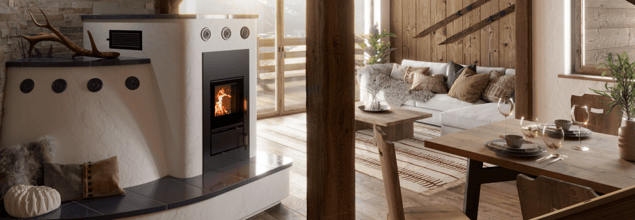
Think about the main purpose of your fireplace as early as possible. Should it mainly serve as a heater or as a decorative element to embellish your home? Or are you looking for a combination of both? If the fireplace is to serve as an additional or primary heating source, water-bearing versions or tiled stoves are ideal for you. Water-bearing fireplaces can be connected to your central heating system and thus heat the whole house.
Decorative fireplaces, on the other hand, offer an impressive flame pattern that primarily provides a cozy atmosphere but offers less heating power.
Don't want to compromise on heat output or design? You don't have to! Many modern fireplaces today combine heat output and aesthetics in an exciting way. They not only provide efficient heat, but are also an attractive eye-catcher in your home.
3. what size and output do I need?
Depending on what purpose your fireplace is to fulfill, it must also have a corresponding output.
The size and output of your fireplace should also be matched to the size of the room and the insulation of your home. A larger room requires a fireplace with a higher heat output, while smaller rooms can manage with a lower output.
Well-insulated rooms require less heating power. Consider how well insulated your home is and how much heating power you actually need. Also think about where you place the fireplace to distribute the heat optimally in the room. This is because the position influences the heating requirement and the efficiency of the fireplace.
You can find out how to calculate your approximate heating requirements using a simple rule of thumb in our blog post on the fireplace purchase checklist.
Our competent specialist dealers will be happy to help you calculate the exact required fireplace output! With their many years of experience, they will find the perfect fireplace for you!
4 Which fuel is right for me?
The choice of fuel has a major influence on the type of fireplace and its installation. However, this decision depends on many different factors.
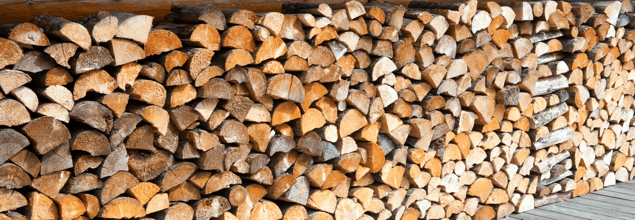
Wood is probably the classic fuel for a fireplace that comes to mind first. A wood-burning fireplace is simply the epitome of a perfect fireside moment - the cozy flickering of the fire, the dancing flecks of light, the crackling, the smell of wood - it all makes an evening in front of a wood-burning fireplace something very special. What's more, wood is valued as a crisis-proof source of energy. But what you need for your wood-burning fireplace is access to the chimney and a place to store your wood.
Gas as a fuel is convenient and clean, but requires a gas connection or the regular replacement of gas cartridges. A chimney connection or flue is also required here.
Bioethanol, on the other hand, requires neither a chimney nor a specific location. All you need to do is refill the bioethanol regularly.
An electric fireplace also does not require a chimney. Here you are completely free to choose the location. All you need is a power socket nearby. Have you ever seen a modern electric fireplace? The flames are now very impressive and some models even have a heating function.
We have prepared a detailed comparison of the individual fuels for you in a separate blog post.
5 Which model is right for me?
This is a very individual question, but one that you should definitely ask yourself. The answer to the question of which stove you want to buy depends not only on your personal preferences, but also on the structural conditions in your home.
For a stove that stands freely in the room, for example, there must be enough space so that the safety distances can be maintained. In addition, there must of course be a chimney flue nearby. Installing a wood-burning stove is much less complicated than installing a fireplace insert.
Are you currently renovating or building? All the better! Then you should consider your fireplace planning right away. Even if you don't want to buy a fireplace just yet, it will make things much easier if you have already planned where the fireplace could be located and all access points etc. are prepared. are prepared.
A fireplace insert is individually installed in your home according to your wishes. However, this also means a little more effort. In addition, these models do not fit in every room. Whether and how exactly a fireplace insert can enhance your living space is best discussed with a specialist dealer. They will be able to give you an individual assessment and provide you with expert support when making your decision.
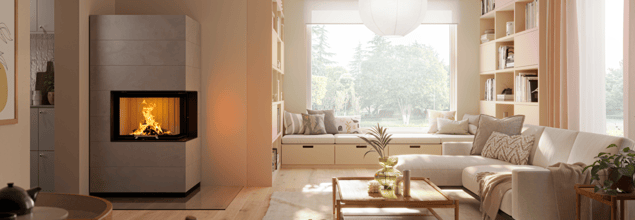
Our Spartherm fireplace systems are an exciting combination of the advantages of these two fireplace solutions. They are just as quick to install as a wood-burning stove and offer maximum design freedom thanks to a wide range of colors. Compared to a wood-burning stove, which cannot be placed directly against the wall, these models are equipped with a special innovation that makes this possible. They can be placed directly in front of walls and fill the room with their radiance, which is similar to that of a built-in fireplace insert.
Looking for something really special? In this blog post, we introduce you to special fireplace models with that certain something.
6. how much do I want to spend?
A fireplace is an investment that is noticeable in various areas. The purchase costs vary greatly depending on the model and features. For example, you need to take into account that installing a fireplace also incurs costs.
Electric fireplaces are the cheapest option and are available from around €500. For technically advanced models, however, you can expect to pay upwards of €1,500. Wood-burning stoves are available in various designs: Freestanding wood-burning stoves start from around €2,500, while individually installed fireplace inserts start from around €7,000. Gas fires, on the other hand, are available from around €4,000.
These price ranges provide a rough guide, but the final fireplace costs also depend on the installation and ongoing operating costs. Regular maintenance and fuel costs should also be factored in. But don't forget the potential savings - if you have cheap access to wood. For detailed information and individual advice, it is best to contact a specialist dealer.
7 Where do I want to buy my fireplace?
Although fireplaces can now also be purchased online, there is a lot to be said for continuing to rely on the expertise of specialist dealers. Specialist dealers offer comprehensive advice that cannot be tailored to your individual needs online. They will help you select the right model for your individual needs and structural requirements and support you with planning and installation.
You also benefit from a direct contact person who is available to help with any questions or problems. Specialist dealers are familiar with local building regulations and can ensure that your fireplace meets all legal requirements. Last but not least, they guarantee a high-quality and safe installation that ensures the longevity and efficiency of your fireplace.
You might also be interested in:
 planning & advice
Buying a wood-burning stove: What to look out for – a checklist
Your dream fireplace is waiting – are you ready? You’ve made up your mind: you’re going for a fireplace. But which one? ...
 environment & law
Fireplace with a catalytic converter: simply cleaner heating | Spartherm Blog
Are you planning your dream fireplace and want to focus not only on design and performance, but also on meeting the ...