



Do you already have a wood-burning stove or fireplace or are you thinking about fulfilling your dream and would like to store a year's worth of wood?
But how much space do you actually need? Are there any regulations for storing firewood? What do I need to pay attention to? That's exactly what we want to guide you through in this article. Storing wood correctly is essential to exploit the full potential of your fireplace.
Well-stored wood ensures efficient combustion and protects both your health and your fireplace from damage. In this article, you will learn everything you need to know about storing wood correctly - from the basics to practical tips for outdoor and indoor storage.
So let's get started right away!
Why is proper wood storage important?
For firewood to burn optimally, it should be dry. The ideal residual moisture content during combustion should be less than 20 percent. This residual moisture is also stipulated in the Federal Immission Control Act. For comparison: A freshly felled tree has an average water content of 50 %.
In order to achieve the 20 %, the wood must be well ventilated and stored in a dry place. The drying time is between six months and two years, depending on the type of wood and storage conditions. Harder wood such as beech or oak must be stored for longer than coniferous wood, but is also more suitable as firewood as it burns more slowly.
The correct storage of firewood has a direct influence on the quality of combustion in your fireplace. Poorly stored wood increases emissions, has a lower calorific value and poses health risks due to mold or pests. So check your wood store regularly and remove infested or rotten wood immediately.
However, damp wood not only poses risks to the environment and your health, but also to your fireplace. Both the combustion chamber and the flue pipe and chimney can be damaged by burning wood that is too damp. This can lead to sooting, for example.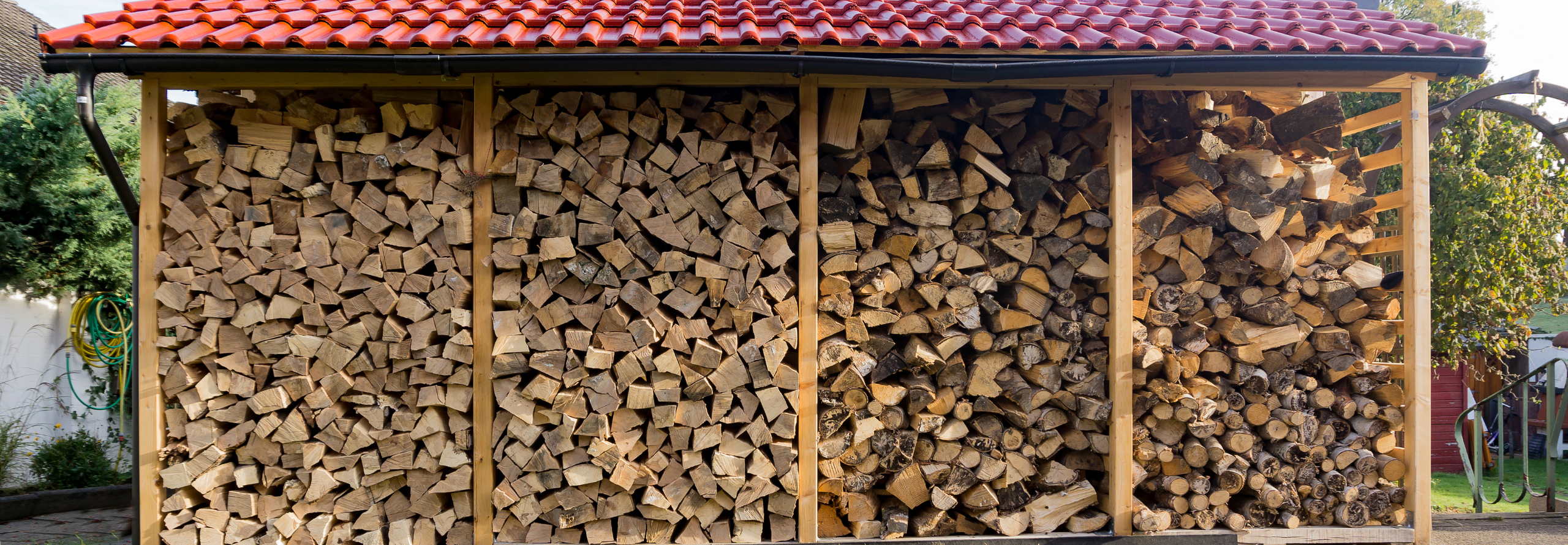
Your outdoor firewood store: What do you need to consider?
One of the most common methods of storage is air-drying outdoors. This allows the wood to dry slowly in a well-ventilated area. However, there are a few things you should be aware of.
How do you find the perfect place to store your firewood?
First of all, you should choose a suitable place to store your wood. For larger storages, it is important to keep the distances to your neighboring properties. This is usually 3 m - but it is best to find out more about this from your local council before you build anything. Also make sure that the wood can be sufficiently ventilated at this location.
Areas enclosed by walls, for example, are not particularly suitable. It is better if you align the storage unit with just one wall so that the air can circulate well through the stack. Make sure to leave a few centimetres of space between the stack and the wall.
The perfect spot is one that receives sunlight for most of the day and is also exposed to light winds.
How much wood can I store?
Depending on the regional regulations, there are various restrictions on how much wood you can store on your property. In most regions, you can store up to 40 cubic meters on your property with a special permit. However, to be on the safe side, check with your local council.
It is best to try to calculate approximately how much wood you need based on the number of kW and your heating requirements. If in doubt, your local specialist dealer will certainly be able to help you with their experience.
What to consider when storing
As the wood is to dry in this location, it is also particularly important to stack and store it correctly. Once you have found a suitable location, you should cut the wood to the same length so that all the logs are roughly the same size to make layering easier.
To protect the wood from further moisture, it should not come into contact with the ground or rain. Many fireplace owners use wood shelters or sheds for this purpose. These can be purchased from DIY stores or built yourself if you have the necessary skills. There are numerous instructions on the internet on how to build your own firewood storage. The only important thing is that the wood is always above the ground and protected from rain from above.
If you want to build your own wood store, you can give free rein to your ideas. There are many creative ways you can store your wood to make it both functional and aesthetically pleasing. Outdoor shelving is an excellent option for stacking your wood neatly and well ventilated.
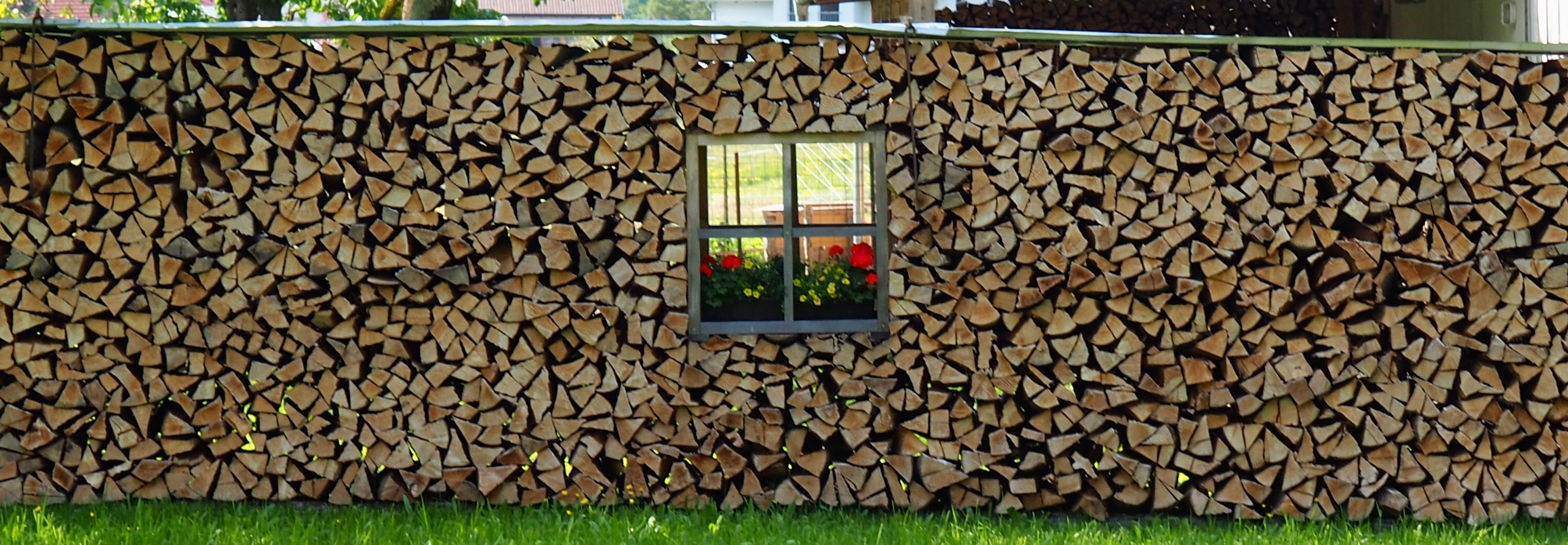
What you should definitely keep in mind:
Never completely cover the wood with a tarpaulin or similar. This would only cause the moisture to build up and provoke mold growth! Make sure that air can always circulate to give the moisture the opportunity to escape from the wood.
In addition to an elaborate construction, Euro boards or laths arranged in a row can also be used as a base. However, here too, gaps should always be left between the slats to allow air to circulate.
Tips for correct stacking:
Stack the wood loosely and always leave some air in between. Dividers with boards simplify stacking and removal to prevent the entire stack from collapsing. It can help to lay the lowest logs crosswise to increase stability. The others can then be stacked lengthwise on top.
If you are not yet so experienced at stacking, a stacking aid can provide you with support. This will prevent the wood from sliding sideways.
Unshapely timbers that jeopardize the stability of the stack can also be dried in mesh boxes.
What else you should bear in mind:
- In fall and winter, the wood automatically becomes damper again. A suitable cover will help to keep the moisture at the same level as before.
- Check the wood regularly for pests or mold and move it if in doubt.
- Do not store the wood for longer than four to five years to avoid woodworm.
- Measure the wood moisture before burning to ensure that you do not exceed the 20 % residual moisture. You can also do this regularly during the drying process to monitor progress.
Tips for storing wood indoors
Of course, your firewood can also be stored indoors. We recommend storing only a few logs at a time. Decorative wood shelves or baskets near the fireplace are best suited for this. This way, you can always store a supply of wood in the house and don't have to make the trip outside to your store every time you need to add more. This is a pleasant relief, especially in winter.
It is important that the wood is kept at a sufficient distance from flammable materials to avoid safety risks. Indoor storage should also be well ventilated to prevent mold growth.
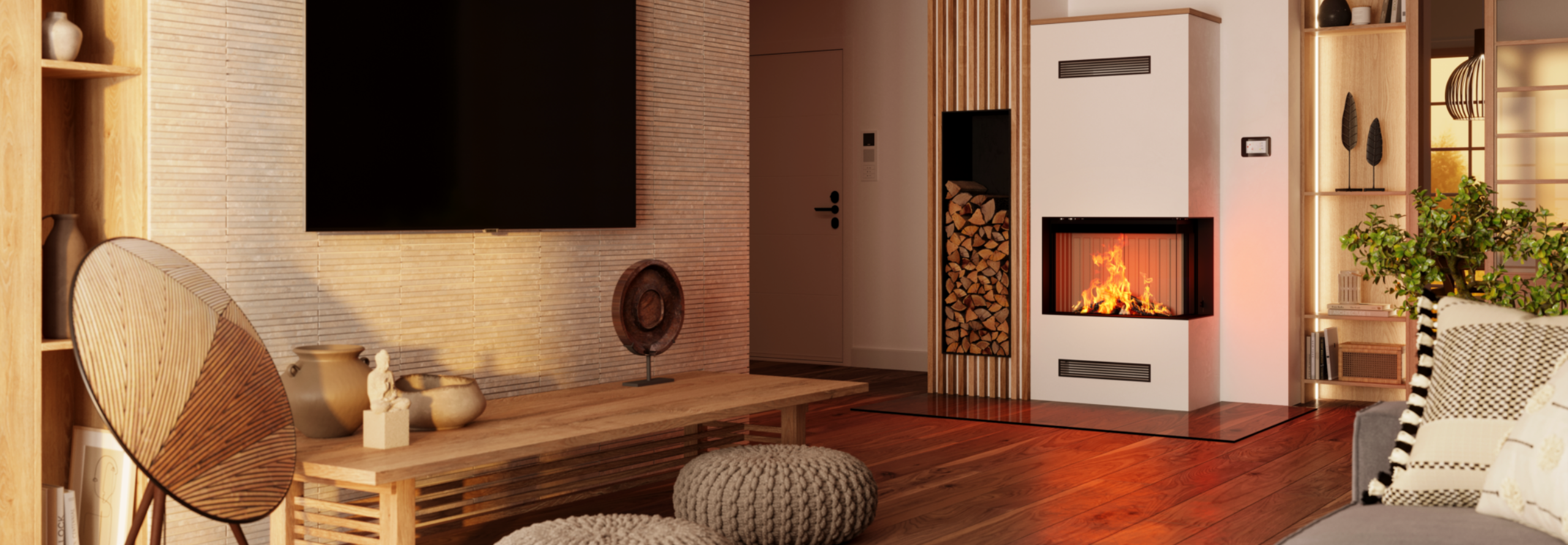
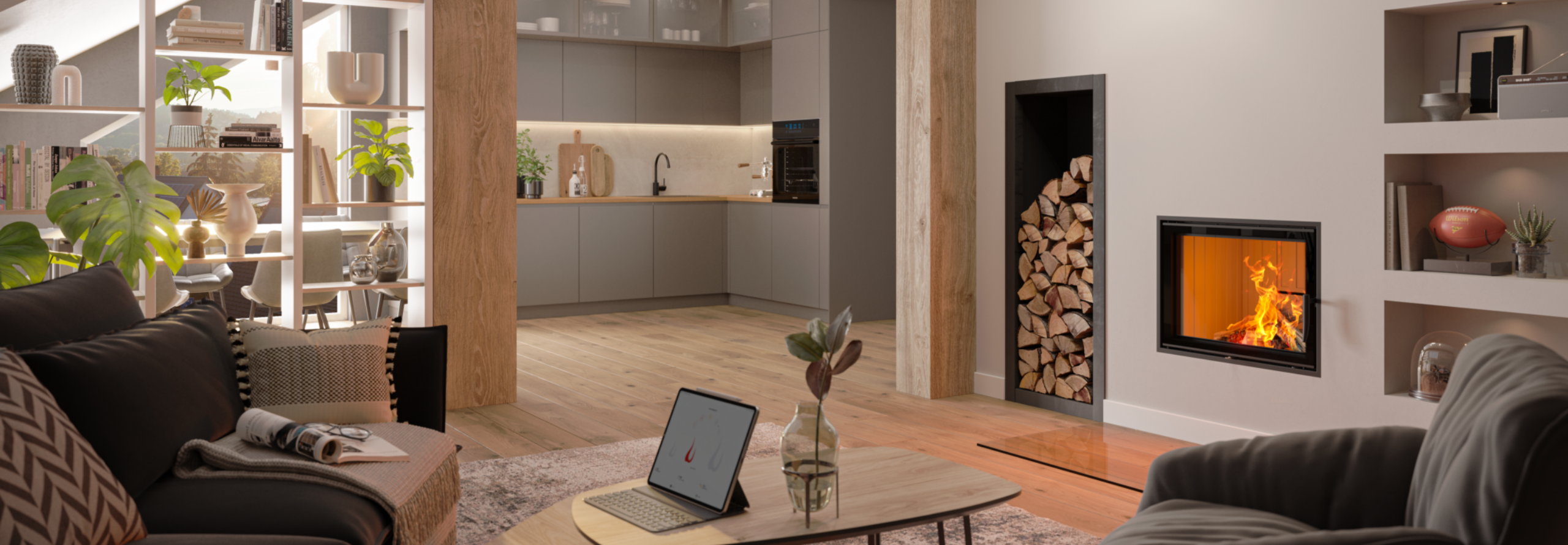
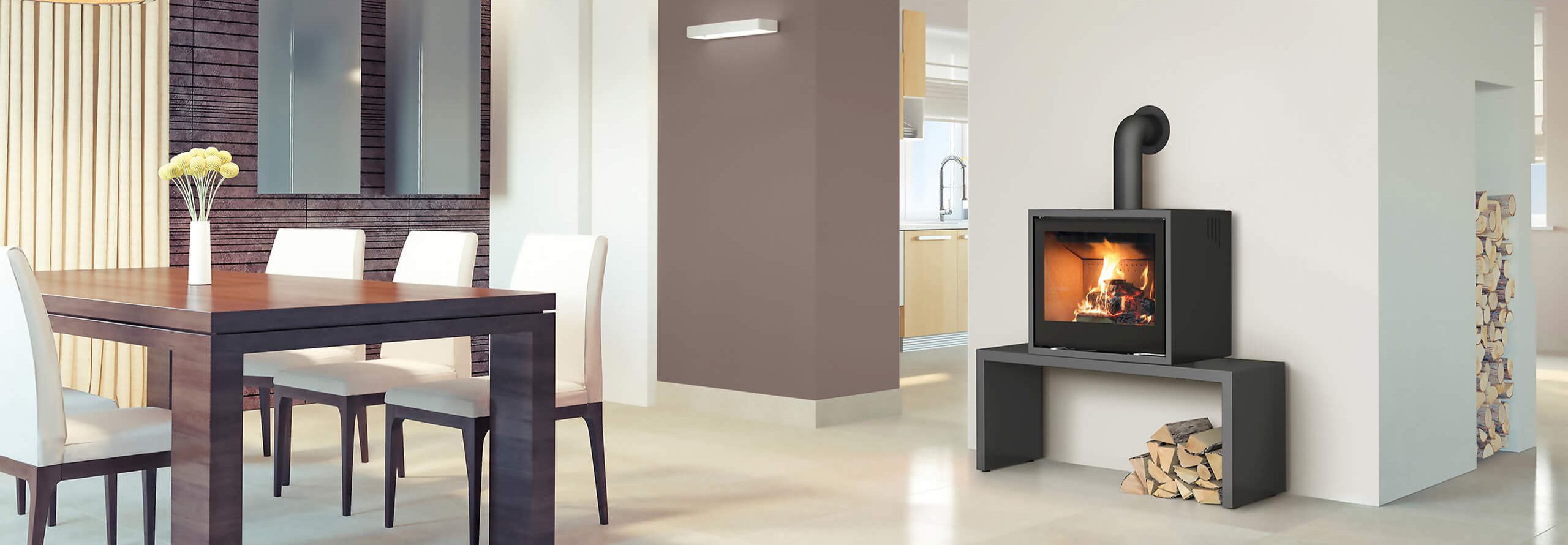
Modern wood-burning stoves harmonize particularly well with metal wood shelves. There are even models that directly include wood storage.
When planning your fireplace insert, you could have a wood shelf integrated directly into the wall. This not only makes it easier to store the wood indoors, but also creates a unique design highlight.
 |
 |
 |
 |
But: never store your wood in the cellar or garage, as this leads to mold growth due to accumulated moisture and makes it difficult for the wood to dry out.
Technical drying: an option for commercial wood drying
For the sake of completeness, we would also like to explain technical drying. While air drying is the most common method for private individuals, there is also technical drying, which is mainly used in industrial applications. In technical drying, the wood is brought to the desired residual moisture content in a short time in special drying chambers using warm air, positive/negative pressure and controlled ventilation. This process is efficient and fast, but also cost-intensive and requires special equipment. This method is generally not practical for private timber storage, but offers an interesting alternative for industrial applications and larger timber processors.
Curious? Then find your dream fireplace today!
You might also be interested in:
 operation & maintenance
Make Your Own Fire Starters: Three Simple DIY Ideas
Do you want to light your stove but don't have a firelighter? Or are you bothered by the uncertainty about the ...
 operation & maintenance
Is your fireplace not drawing properly or smoking? Causes and solutions
A crackling open fire brings cozy warmth and atmosphere. But what if the fire just doesn't work the way you want it to? ...