



Rising energy costs, uncertainties in the electricity and gas supply and the desire for more predictability - many households are currently facing major challenges. You may also be asking yourself: How can I effectively reduce my heating costs? Is a fireplace really a cost-effective alternative or just an additional, expensive heating system?
If you already have a fireplace or are thinking about getting one, then you will want to know how to get the maximum efficiency and warmth out of your fireplace.
That's why we've put together a few tips and tricks for you on how to operate your fireplace efficiently to reduce your heating costs. We'll also tell you which technologies and fireplace models will help you make the most of the heat from your fireplace.
Maximum heat output: how to use your fireplace efficiently
Correct use plays a decisive role in ensuring that your fireplace works cost-efficiently. From the choice of firewood to storage and the amount of wood - every point can make a big difference.
Regular maintenance forms the basis for optimum performance
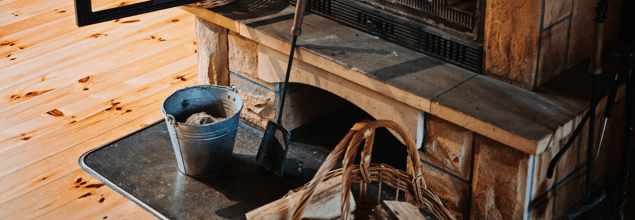
Regular maintenance is essential to maintain the efficiency of your stove in the long term. In addition to the usual cleaning, professional maintenance by a specialist company is also advisable. They can ensure that your fireplace is clean and safe to use. A blocked or dirty flue system can not only affect the efficiency of your fireplace, but also pose a safety risk.
We have compiled tips & tricks for cleaning and maintaining your fireplace in another blog post.
Maximum performance with the right wood
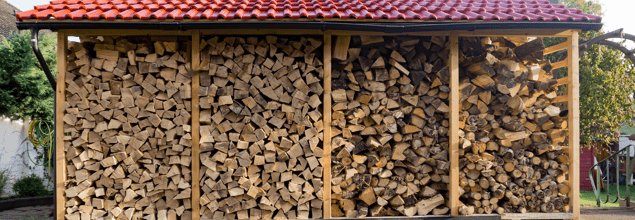
When it comes to heating efficiently, choosing the right firewood is crucial. You may have wondered why your fireplace doesn't provide the heat you want - often it's down to the type or quantity of wood. Hardwoods such as beech, oak or ash offer excellent heat output. They burn more evenly, more slowly and give off constant heat over longer periods of time - ideal if you want to heat your home efficiently.
Softwoods such as pine or spruce, on the other hand, burn faster and produce more ash and flying sparks. They are therefore less suitable if you want to generate long-lasting, even heat.
Storage is just as important: if the wood is not properly dried, it burns poorly and produces more soot. Make sure you only use well-dried hardwood. Your fireplace can only work efficiently if the moisture content of the wood is below 20 %.
You can find out exactly what you should pay attention to when storing your firewood in our blog post.
The amount of wood you use also plays an important role. Sometimes you tend to add too much wood at once, which leads to temperature peaks. Or you add too little so that the room doesn't get warm enough. It's best to check the operating instructions for your stove: there you will find precise information on the optimum amount of wood and log size for your model. This will help you achieve a constant, efficient heat output and ensure that your fireplace can work optimally.
Efficient lighting: The start is crucial
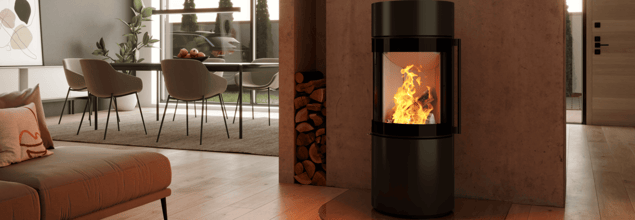
To exploit the full potential of your fireplace, starting the fire is particularly important. An efficiently lit fire burns more evenly, saves firewood and ensures sustainable heat development. Here are two basic tips to get the fire going properly:
- Arrange the wood in layers to allow for optimal air circulation. Start with two to three logs, on top of which you place the kindling and two firelighters. Make sure that enough air can circulate through the layers.
- Now the fire burns from top to bottom and can develop evenly. This allows better use of the energy. During these first few minutes, the air supply should be fully open so that the fire receives enough oxygen. As soon as the fire has reached the right temperature, the air supply can be reduced.
- Then you just have to wait until the fuel has completely burned down to embers and no more flames can be seen. Then you can add logs.
- To do this, first open the combustion air completely and open the door a small gap to equalize the pressure. You can only open the door fully after two to three seconds. Logs can then be placed on the embers. Be careful not to smother the embers!
- As soon as the fire is stable, usually after two to five minutes, you can reduce the air supply slightly to achieve a quieter, more efficient combustion and make optimum use of the heat. You can also be supported in this by so-called smart fireplace assistance functions
Modern fireplace technology: convenient solutions to increase efficiency
Modern fireplace technology allows you to operate your fireplace even more efficiently. Among other things, smart assistance systems can optimally adjust the air supply or monitor the pressure conditions and chimney draught. They help you to operate your fireplace safely, save fuel, reduce emissions and achieve an even heat output - without having to constantly intervene manually.
And best of all: you can also view the whole thing via app or even open your viewing window using the app.
Find out more about smart fireplace assistance systems on our website.

Distribute the heat from the fireplace
There are various ways to distribute the heat from your fireplace so that it doesn't just heat the room it's in and you can turn the heating off from time to time:
Well thought-out placement
If you don't yet have a fireplace, you should consider the placement of your fireplace carefully. Depending on the location, several rooms can be heated directly by the fireplace. It is best to talk to your local specialist dealer to discuss the options available to you.
Modular forced convection with S-Vent
The low-noise S-Vent fan blower ensures even better heat distribution. This system increases the convection heat share of your stove by up to 75 %, so that the heat generated is distributed more quickly throughout the room. The installation is flexible and does not interfere with the natural convection of the fireplace. You can find more information about the S-Vent and its benefits on our website.
Warm air distribution systems with air ducts
Another way to distribute the heat is to use special air ducts that transport the hot air from a stove into neighboring rooms. These systems make optimum use of the heat generated to heat several rooms at the same time. Ask your local specialist dealer for advice on this.
Optimal systems for efficient heating
Modern fireplaces now boast impressive efficiency, but when it comes to making optimum use of the heat from the fireplace, storage heaters and water-bearing fireplaces offer some particular advantages. These fireplace models make it possible to store the heat generated for longer and distribute it more evenly throughout the house.
Storage stoves for long-lasting heat
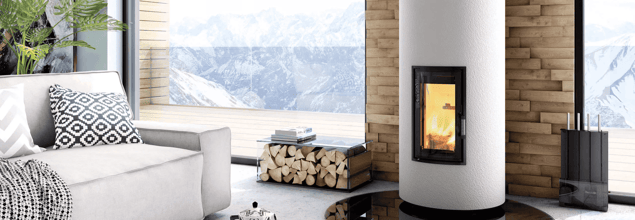
Storage stoves are particularly suitable when it comes to releasing the heat generated evenly over a long period of time. These stove models store the heat generated in the stove body and gently release it into the room as radiant heat over many hours. Once lit, a storage stove ensures a comfortably warm home - even long after the fire has gone out.
Water-bearing fireplaces for warmth throughout the house
Water-bearing fireplaces offer an efficient way of storing heat and distributing it throughout the house. They channel the excess energy into the central heating system by heating water and storing heat. This not only heats the room in which the fireplace is installed, but also adjacent rooms or even the entire house. This technology makes it possible to reduce the heating load of the central heating system, as the wood-burning stove provides additional heat without having to rely on fossil fuels. Water-bearing stoves are a flexible solution for anyone who wants to maximize the efficiency of their stove and use the heat evenly throughout the living area.
Maximum efficiency thanks to the symbiosis of fireplace and heat pump
This smart combination brings together the best of both worlds: While the heat pump ensures pleasant room temperatures all year round, the fireplace takes on additional heating load on particularly cold days or in the evenings. This reduces the load on the heat pump, saves electricity and at the same time offers the cozy ambience of a fireplace.
For more information on this future-proof heating solution, you can take a look at our detailed blog post on combining a fireplace and heat pump.
With the right tips and technologies, you can significantly increase the efficiency of your fireplace and save on heating costs. Find out more about our fireplace solutions or get individual advice from one of our specialist dealers directly at your location.
You might also be interested in:
 Technology & Efficiency
Negative Pressure Monitor on the Chimney: Safety with Range Hood & Ventilation System
A fire needs air - and a properly functioning flue is the be-all and end-all. Modern, well-insulated houses put this to ...
5 min read
 Technology & Efficiency
Fireplace features: From combustion control to automatic glass opening
A crackling open fire creates a special atmosphere. But hand on heart: sometimes operating a fireplace is associated ...
4 min read