



Are you toying with the idea of buying a water-bearing wood-burning stove - but are not yet sure whether the investment is really worth it? No wonder: there is a lot of information circulating online, some of which sounds convincing, others rather confusing.
To help you make an informed decision, we will show you clearly and comprehensibly what the pros and cons of a water-bearing fireplace are - compact, clear and to the point.
What is a water-bearing fireplace and how does it work?
A water-bearing stove is a fireplace with an integrated heat exchanger. This makes it an intelligent heating system that makes double use of the energy from the fire. In addition to the direct radiant heat for the room, water is also heated and fed into a buffer tank. From there, the stored heat can be called up as required - for hot water or radiators.
How exactly does it work?
Heat exchanger: A heat exchanger is located in the upper section of the stove. Water flows through this, which is heated by the heat of the rising flue gas.
Buffer tank: When the water has reached a certain temperature, it is fed into a buffer tank, which transfers it to the heating system as required.
Heating system integration: The stored heat can be used to heat other rooms or to heat water.
This technology makes it possible to use the energy from the fire in a particularly intelligent way by storing it in the form of hot water. A water-bearing wood-burning stove therefore not only provides a cozy atmosphere, but also a sustainable heating solution for your home.
Would you like to know more about the technical background? In an expert interview on the Spartherm blog, our product manager explains why water-bearing stoves are particularly efficient, what is important when installing them and what advantages they offer in everyday life.
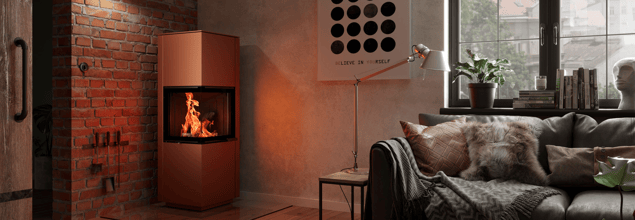
4 good reasons for a water-bearing fireplace
"This type of heating is not only CO₂-neutral and cost-saving. You can also enjoy the view of the crackling fire and benefit from the radiant heat. If you ask me, that's a multiple benefit." Daniel Przybyl, Head of Spartherm Product Management
Double heat utilization:A water-bearing fireplace uses the wood particularly efficiently. The heat generated is not only emitted directly into the living space, but is also fed into your heating system via a heat exchanger. This reduces the load on your heating system and lowers your energy costs.
Flexibly usable heat:
By connecting to the buffer cylinder, the heat from your fire is used to heat water. This means that even if the fire has long since gone out, you can still take a hot shower later or heat another room with the energy from the fire via a radiator.
Less dependence on oil & gas:
A water-bearing fireplace noticeably reduces your need for fossil fuels. It offers you more independence and long-term security, especially in times of highly fluctuating prices.
CO₂-neutral and sustainable:
A water-bearing fireplace relies on wood - a regional, renewable raw material. During combustion, only as much CO₂ is released as the tree has previously absorbed. In combination with modern heating technology, you can heat in a particularly climate-friendly way.
What you should know before you buy
A water-bearing fireplace is a sustainable heating solution - but it also has a few special features that you should be aware of before buying. Compared to classic wood-burning stoves, the planning and installation effort is somewhat higher - but the benefits are all the greater.
- Planning: Unlike classic wood-burning stoves, the precise planning of water-bearing models is somewhat more extensive. This includes coordination with your existing heating system, the right buffer tank and any structural adjustments. The earlier you plan, the smoother the implementation.
- Technology: Integration into your existing heating system requires specialist knowledge and should be carried out by a qualified company. Close coordination with specialist tradesmen and heating engineers is recommended.
- Costs: The more complex technology and integration into the heating system result in higher purchase and installation costs. However, these pay off in the long term through savings on running heating costs.
- Space requirement: Additional space is required for the buffer cylinder, the connections and the necessary technology.
- Advice: Good planning is the be-all and end-all - so seek advice from an experienced specialist company at an early stage. This is the only way to ensure that your water-bearing fireplace works efficiently, safely and optimally tailored to your needs.
Heat pump or solar system - and a water-bearing fireplace? This is how efficient heating works today
Do you want to heat your home in a more environmentally friendly, efficient and independent way? Then it's worth taking a look at the combination of a water-bearing fireplace with other sustainable heating systems - such as a heat pump or a solar thermal system.
Solar thermal system + water-bearing fireplace
Solar thermal systems provide reliable hot water for your household, especially in the summer months. In the colder months of the year, when the sun's rays diminish, the water-bearing fireplace takes over: it provides the necessary heat for heating and hot water while also creating a cozy atmosphere. Both systems feed into the same buffer cylinder - creating a well thought-out solution that works all year round.
Heat pump + water-bearing fireplace
Heat pumps work particularly efficiently in mild temperatures and thus cover the basic daily heating requirements. If it gets really cold outside or you want it to be particularly cozy in the evening, the water-bearing fireplace steps in - with powerful heat output and soothing radiant heat. Here too, a shared buffer cylinder is used to optimally distribute and store the energy generated.
Would you like to find out more about how heat pumps and fireplaces complement each other perfectly? Then take a look at our blog post.
Regardless of whether you rely on solar power or environmental heat: In combination with a water-bearing fireplace, you get the best of both worlds - for an efficient, comfortable and climate-friendly home.
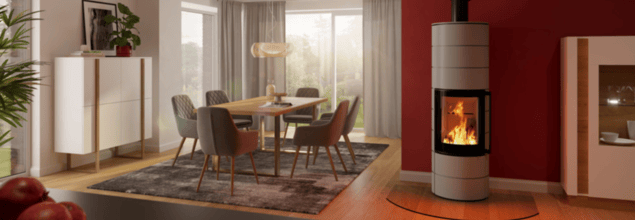
For whom is a water-bearing fireplace worthwhile?
A water-bearing stove is particularly worthwhile for you if you want to save on heating costs in the long term, live more sustainably and heat your home more efficiently. It is particularly suitable if:
- you own your own home and have enough space for the technology,
- your heating requirements go beyond the usual, e.g. due to larger living spaces or several floors,
- you want to become less dependent on fluctuating oil and gas prices,
- you want to supplement your existing heating system with a regenerative heat source.
For a water-bearing fireplace, you need a suitable buffer cylinder and professional integration into your heating system. Our specialist partners will help you with the planning and implementation - so that your fireplace not only looks good, but also works efficiently.
You might also be interested in:
 Technology & Efficiency
Negative Pressure Monitor on the Chimney: Safety with Range Hood & Ventilation System
A fire needs air - and a properly functioning flue is the be-all and end-all. Modern, well-insulated houses put this to ...
5 min read
 Technology & Efficiency
Fireplace features: From combustion control to automatic glass opening
A crackling open fire creates a special atmosphere. But hand on heart: sometimes operating a fireplace is associated ...
4 min read