



Sustainable heating and
using fuel efficiently
Why heating with wood is hotly debated
Sustainability is the buzzword of our time - and is particularly relevant when it comes to heating. Wood as a fuel is often the focus of debate: Is it really environmentally friendly? What about emissions and cost-effectiveness? The fact is that around a third of
heating in the private sector in Germany comes from renewable energies, with wood playing a central role. But how sustainable is heating with wood really? With a look at forests, firewood quality, emissions and modern technologies, we provide a well-founded fact check that sheds light on the controversial discussions and offers practical tips for using wood as a fuel.
Forest fact check: sustainability, CO2 sequestration andregionalresources
Forests in Germany are growing - despite challenges
An impressive figure: 11 million hectares of forest - almost a third of
third of Germany is forested, as the Federal Forest Inventory 2024 shows. Despite challenges such as drought and bark beetles, the carbon stock in living biomass has increased by around one percent in the last ten years. This shows that Sustainable forestry works. For over 300 years, wood has been managed in Germany according to the principle of sustainability. But what exactly does that mean? Sustainability in forestry ensures that no more wood is harvested than grows back. This not only guarantees the long-term availability of the raw material, but also the preservation of the ecological functions of our forests.
The CO2 cycle: How wood contributes to the CO2 balance
Wood is a renewable energy source whose use is integrated into the natural CO2
-cycle. When it is burned, only as much CO2 is released as the tree has previously absorbed during growth. This makes wood a decisive factor in the energy transition. However, it is important to note that correct use plays a role here. Incompletely burned wood can cause increased emissions, which is why modern
technologies and professional handling are crucial. Advanced stoves with optimized air flow and post-combustion minimize these emissions and ensure more efficient use of the fuel. Choosing the right wood also plays a key role: dry, untreated wood ensures cleaner combustion and helps to reduce pollutant emissions.
Regional wood sources: short transportation routes, high efficiency
Good to know: Less than three percent of firewood in Germany is imported. Most of it comes from local forests, which means short transportation routes and a positive energy balance. This makes firewood not only ecologically sensible, but also economically attractive. The use of regional wood sources also helps to strengthen the local economy. The sale of firewood supports forest management and the conversion to species-rich mixed forests, which promotes biodiversity in the long term.
A comparison: wood versus fossil fuels
When burned, fossil fuels release carbon that has been sequestered for millions of years. Wood, on the other hand, closes the CO2 cycle - a crucial difference that makes wood a central component of the energy transition. In addition, fossil fuels require complex extraction and refinery processes that consume additional energy and resources. Wood, on the other hand, grows on our doorstep and is therefore much more efficient.
Firewood fact check: quality, storage and efficiency
Firewood and construction timber: two different worlds
Firewood is usually lower-quality wood that is produced during thinning or as offcuts in sawmills. It is not suitable for construction or furniture production, but is ideal for use as a source of energy. Crown wood or low-grade trunk wood that is unsuitable for other uses is often used. This makes energy use particularly sustainable, as no high-quality wood is "wasted".
Efficient heating with modern wood-burning stoves
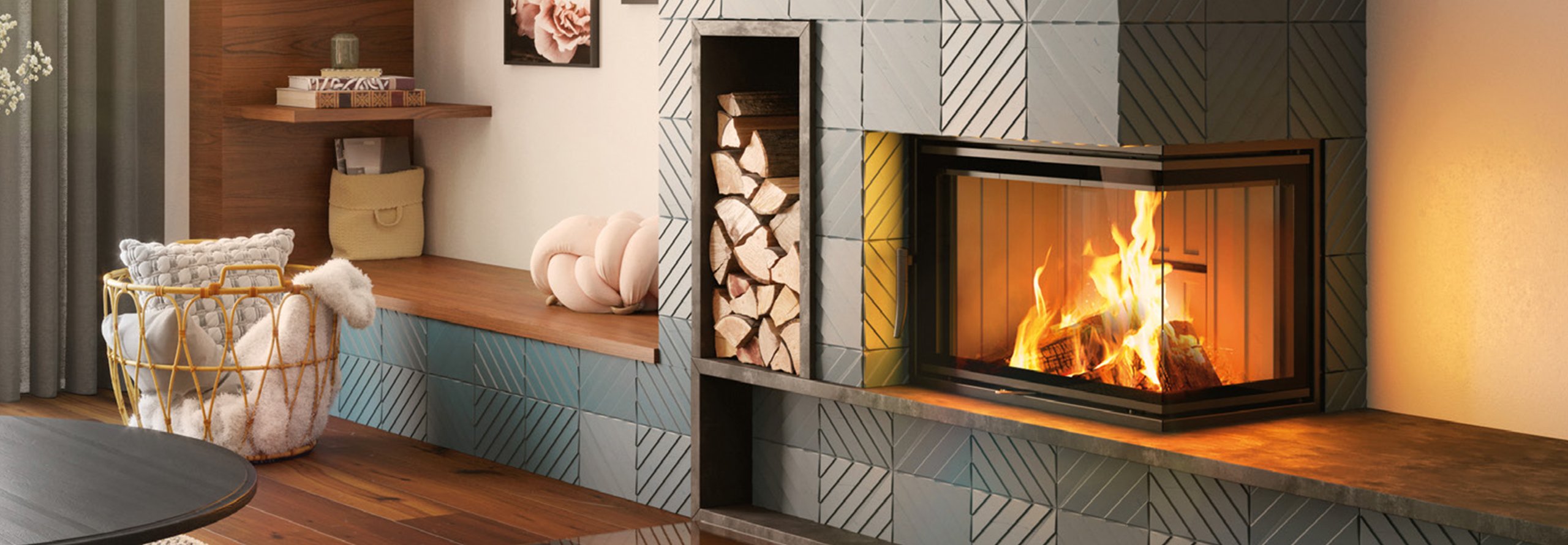
Stoves from Spartherm are characterized by high combustion efficiency. Thanks to innovative combustion chamber technologies and optimized air supply, more heat is obtained from the fuel while emissions are reduced. The precise control of the air supply and the sophisticated post-combustion technology ensure that even the smallest particles are burned efficiently. This not only makes optimum use of the fuel, but also protects the environment.
Excursus: The right choice of wood and storage
Only well-dried wood guarantees clean and efficient combustion. The residual moisture content should be below 20 percent. Ideally, the wood should be stored in a sheltered, airy place for at least two years so that it can dry optimally. Care should be taken to ensure that the wood is not lying directly on the floor to prevent mold growth. Suitable types of wood are beech, oak or ash, for example, as they have a high calorific value.
Emissions fact check: Particulate matter and modern technologies
Particulate matter and the strict regulations in Germany
The Federal Immission Control Ordinance (BImSchV) sets strict limits for wood-burning stoves - with direct consequences for stove owners. For example, new regulations came into force at the beginning of the year: older models that do not comply with the stricter emission values must be retrofitted or shut down. Those who switch to a modern stove at an early stage not only meet the legal requirements, but also benefit from more efficient combustion and lower fuel consumption.
Modern stoves such as those from Spartherm reduce particulate emissions by up to 85 percent - thanks to optimized combustion chambers. PM2.5 emissions in Germany have already fallen significantly since 2010, which shows that new technologies are making heating cleaner: New technologies are making heating cleaner and future-proof.
Intelligent support: smart fireplace assistance functions
Smart fireplace assistance functions from Spartherm optimize combustion, reduce emissions and increase ease of use. Some functions can even be controlled via smartphone or tablet, so you can keep an eye on the burning process at all times. By automatically adjusting the air supply, the fuel is used efficiently, which improves the energy balance and minimizes soot formation. However, it is not only the air supply, but also the flue draught that has a significant influence on combustion.
This is where the S-ELA electronic flue gas damper from Spartherm comes into play. It continuously regulates the negative pressure in the chimney and keeps it at an optimum level to prevent temperature losses. The function works independently of the stove model and manufacturer, requires no manual adjustment and always remains reliable thanks to the automatic zero setting when the door is opened or in the event of a power failure. Maintenance-free and efficient - for safe and stable stove operation.
Fact check economy: heating costs at a glance: A comparison of wood and heating oil
Why wood is convincing in the long term
One cubic meter of hardwood is roughly equivalent to the heating power of 200
liters of heating oil. While heating oil prices fluctuate, firewood often remains a cheaper alternative - especially if it is purchased directly from the forestry company. The price of ready-to-burn wood is around 25 percent lower than the cost of heating oil.
Efficiency that pays off: high-quality combustion technologies
Modern wood-burning stoves get maximum heat from the wood through optimized combustion and post-combustion. This reduces heating costs and protects the environment at the same time. Thanks to advanced technology, a modern stove can generate more heat with less wood. This means not only cost savings, but also longer availability of fuel supplies.
Safe and self-sufficient: the advantages of wood-burning stoves in times of crisis
Wood-burning stoves are not dependent on electricity or external energy sources. In times of geopolitical crises or power cuts, they provide a reliable and safe source of heat. This is a great advantage, especially in rural areas where security of supply plays an important role. In addition, storing firewood offers an independent and flexible heating solution that is available at short notice.
Conclusion: wood as a sustainable energy source
Wood is a versatile, sustainable fuel which, when used correctly and with modern technology, offers an environmentally friendly alternative to fossil fuels.
With efficient wood-burning stoves, such as those from Spartherm, you can get the best out of wood as a fuel - for a warm future with a clear conscience. Choosing wood as a heating fuel means investing in a sustainable, efficient and independent heat source that also contributes to the energy transition.
You might also be interested in:
 Environment & Law
Fireplace with a catalytic converter: simply cleaner heating | Spartherm Blog
Are you planning your dream fireplace and want to focus not only on design and performance, but also on meeting the ...
4 min read
 Environment & Law
Is heating with a fireplace carbon-neutral?
The topic of CO₂ neutrality is something you hear again and again, especially in connection with wood-burning stoves - ...
5 min read