



When the days get shorter and the evenings get cooler, there is hardly anything better than the soothing crackle of a fire. So that you can enjoy your fire without any worries, you should prepare your stove for the heating season in good time after the summer break.
What many people forget: An unkempt fireplace can not only lose efficiency, but can also become a real danger - for example due to blocked flue gas ducts or leaking door seals.
In this article, we show you step by step what you should pay attention to when firing up your fireplace after the summer break: from thorough cleaning to wood storage.
What you can expect
- Thorough cleaning - for a safe start to the heating season
- My fireplace stinks after the summer break - is that normal?
- Check the chimney & flue pipe - for a clear flue
- Fuel check: Is your wood ready for the next use?
- Get your accessories in shape - everything you need for your moment of fire
- Regulations at a glance: Is your fireplace still permitted?
- Frequently asked questions about preparing your fireplace for the heating season
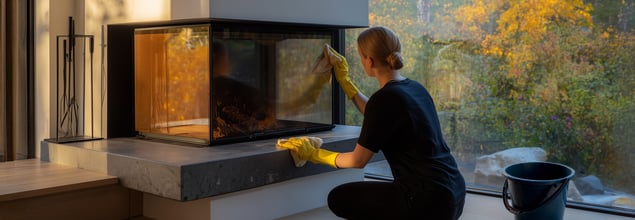
Thorough cleaning - for a safe start to the heating season
Before you put your fireplace back into operation, you should clean and check it thoroughly. This not only ensures a beautiful flame pattern, but also greater safety and efficiency.
- Viewing window:
Remove soot and deposits with special fireplace glass cleaner - for a clear view of the fire. - Combustion chamber & ash pan:
Completely remove ash, soot and residue. Also pay attention to hard-to-reach areas. - Rust & air ducts:
Check for continuity and cleanliness - important for air supply and clean combustion. - Check the door seals:
Do a leaf test: Pinch a sheet of paper and close the door. If it can be pulled out easily, the seal is leaking and should be replaced.
Our tip
Many of these steps can also be carried out directly after the heating period in summer. Then you'll already have the maintenance behind you when it starts again in the fall.
Also read our article: "Your fireplace in summer - what you should keep in mind"
And best of all: a clean fireplace burns more efficiently - this saves fuel, reduces emissions and provides more heat.
My fireplace stinks after the summer break - is that normal?
Yes, a slight smell can occur after a long period of inactivity - especially if the stove has not been aired or cleaned during the summer. Common causes are
- Deposits of soot or ash that have drawn in moisture
- Dust and dirt in the combustion chamber or air ducts
- Moisture in the chimney, for example due to a lack of draught or weather conditions
What you can do:
- Clean thoroughly before using the stove for the first time (click here for the cleaning guide)
- Allow draughts, e.g. open the stove door briefly and ventilate well
- Light the stove for the first time with small logs to neutralize odours
- Check the wood moisture content - wood that is too damp can continue to smell even after heating up
And as mentioned earlier: if you are diligent at the end of the heating season, you can also effectively prevent unpleasant odors in autumn. Read our article "Your fireplace in summer - what you should bear in mind".
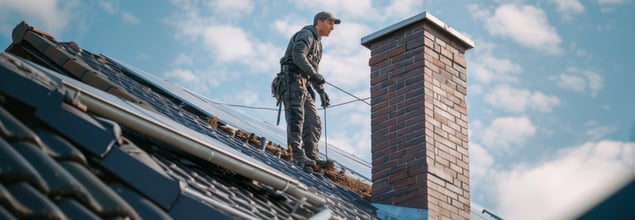
Check chimney & flue pipe - for a clear flue
A clean and functioning chimney is the basic prerequisite for safe and efficient heating.
You should pay attention to this
- Keep the flue gas path clear:
Over time, soot, leaves or even birds' nests can build up in the chimney or flue pipe - blocking the draught. - Hire a chimney sweep:
Regular inspections by a chimney sweep are required by law - and make absolute sense. He not only checks the chimney, but also the draught and seals. - Test the chimney draught yourself:
Light a piece of paper in the firebox and observe the smoke. Is it drawn upwards quickly and evenly? Perfect. Does it draw slowly or come back into the room? Then the draught is not optimal and you should have it checked professionally.
Important to know
A poor chimney draught not only leads to increased smoke development, but also to inefficient combustion. This means: more emissions, less heat and, in the worst case, even harmful smoke in the living room.
.png?width=2560&height=890&name=3%20(1).png)
Fuel check: Is your wood ready for the next use?
So that you can start the heating season safely, efficiently and environmentally consciously, you should take a close look at your wood in advance.
This is what matters
Dryness is a must:
Your wood should have a residual moisture content of less than 20 % - anything above this leads to poor combustion, more smoke and increased pollutant emissions.
Use a moisture meter: With a wood moisture meter, you can check at any time whether your supply is ready for use.
Choose the right type of wood:
Not all wood burns the same. Hardwoods such as beech, oak or birch are best suited. They have a high energy value, burn evenly and quietly - in contrast to resin-rich softwoods. Beech is particularly popular: high calorific value (approx. 2,100 kWh), no resin, clean and efficient fire.
Store correctly - here's how:
To keep your wood dry, store it in an airy place and protected from rain - preferably not directly on the concrete floor, but on a pallet or a grid. This allows air to circulate and moisture to escape.
You can find outhow to store firewood correctly in detail in this article.
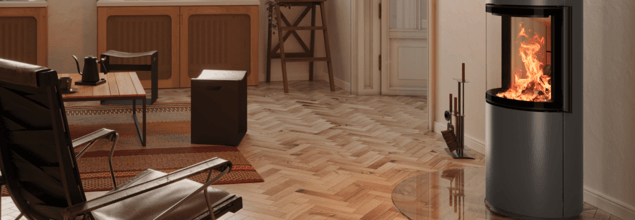
Getting your accessories in shape - everything you need for your firing moment
A clean fireplace, dry wood - and then the firelighter is missing? It's worth taking a quick look at your fireplace accessories so you don't have to search for long at the start of the heating season.
You should check this now
- Stove set complete and ready for use?
Sweep, poker, tongs - your tools should be functional, sturdy and ready to hand. - Fill up with kindling & ignition aids:
Environmentally friendly kindling will ensure your fire starts quickly and safely. Now is the perfect time to stock up. - Don't forget the optional accessories:
Fireplace gloves, wood basket or ash bucket make your everyday life easier and ensure tidiness and convenience.
You can find more tips & recommendations in the blog post"Which fireplace accessories do you really need? " - ideal if you want to upgrade your accessories again or aren't sure what you really need.
Regulations at a glance: Is your fireplace still permitted?
With the start of the heating season, it is worth taking a closer look at the legal framework - because outdated fireplace systems may no longer be allowed to be operated. An important regulation here is the 2nd stage of the Federal Immission Control Ordinance (BImSchV).
You should ask yourself these questions:
- Does your fireplace comply with the 2nd stage of the BImSchV?
Modern fireplaces must comply with strict limit values for emissions and efficiency. - Is your model older than 2010?
Then replacement or retrofitting is often mandatory. Otherwise there may be problems at the next chimney sweep inspection at the latest.
We have prepared everything you need to know about the BImSchV for you in a separate blog post.
Now is the best time - get your fireplace in top shape!
The first chilly evening often comes sooner than expected. If you take precautions now, you can enjoy the heating season in a relaxed and safe manner.
And if you need help with this, our local specialist dealers will be happy to help you.
Get your fireplace ready - and look forward to a safe, clean and atmospheric fire experience.
Frequently asked questions about preparing your fireplace for the heating season
When should I clean my fireplace?
Ideally, you should clean your fireplace immediately after the heating season - in late spring or summer. Then it is clean and ready for the next season. However, you should check and clean all components thoroughly at the latest before the first lighting in the fall.
We show you how to do this in our chimney cleaning guide.
How do I know if my wood is dry enough?
The residual moisture content of your firewood should be below 20 %. You can check this with a simple wood moisture meter - these are inexpensive and reliable.
You can find more tips on storage and selection in the article "Storing firewood - the most important tips".
What can I do if the fire draws poorly?
A poor draught can have many causes - from blocked flue gas ducts to weather conditions or incorrect negative pressure in the room.
Here's what you can do:
- Visually inspect the chimney (leaves, soot, bird's nests)
- Test the chimney flue: light paper and observe the smoke
- Contact the chimney sweep - the inspection is required by law anyway
- For permanent problems, it is worth talking to your Spartherm specialist dealer
Note: A poor draught can lead to smoke development in the room and incomplete combustion - you should avoid both.
Which accessories are really useful?
Good fireplace accessories increase safety and comfort. Our recommendation as a manufacturer:
- Stove cutlery (e.g. poker, tongs, broom)
- Spark guard or fireplace mat
- Heat protection gloves
- Firelighters & ignition aids
- Ash bucket & wood basket
Still unsure? In our article "Which fireplace accessories do you really need?" you will find a detailed overview with expert tips.
You might also be interested in:
 operation & maintenance
Make Your Own Fire Starters: Three Simple DIY Ideas
Do you want to light your stove but don't have a firelighter? Or are you bothered by the uncertainty about the ...
 operation & maintenance
Is your fireplace not drawing properly or smoking? Causes and solutions
A crackling open fire brings cozy warmth and atmosphere. But what if the fire just doesn't work the way you want it to? ...